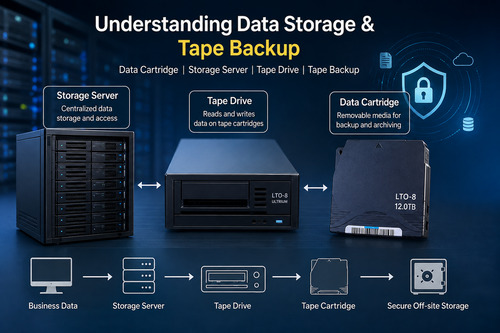
Data storage is an essential part of modern IT infrastructure, especially for businesses that manage large volumes of files, applications, databases, and backup records. Choosing the right storage technology can improve data protection, accessibility, scalability, and long-term reliability. Among the widely used solutions are data cartridges, storage servers, tape drives, and tape backup systems.
This guide explains what is a data cartridge, how storage servers work, the purpose of tape drives, and why organizations use tape backup for secure and cost-effective data protection.
What Is a Data Cartridge?
A data cartridge is a removable storage medium designed to store and protect digital information. Unlike traditional internal storage devices, cartridges can be removed from a system and stored separately, making them useful for backup, archiving, and long-term data retention.
Modern data cartridges can provide high storage capacity while supporting reliable data transfer and offline storage. They are commonly used by businesses, data centers, IT departments, and organizations that need to maintain backup copies of important information.
Data cartridges are particularly useful when organizations want to keep backup data separate from their primary network. This physical separation can help reduce the impact of certain system failures, accidental deletion, or security incidents.
What Is a Storage Server?
What is a storage server? A storage server is a dedicated computer system that provides centralized storage and access to digital data across a network. It allows multiple authorized users, computers, applications, or devices to store and retrieve files from a common storage environment.
Storage servers are commonly used in offices, enterprises, data centers, educational institutions, and other organizations where centralized data management is important. They can support file sharing, application data, database storage, backup operations, and other business workloads.
A properly configured storage server can also help organizations manage storage capacity more efficiently. Depending on business requirements, storage servers may be integrated with different storage technologies and backup solutions.
What Is a Tape Drive?
What is a tape drive? A tape drive is a hardware device that reads data from and writes data to magnetic tape cartridges. It is primarily used for data backup, archiving, and long-term storage rather than everyday file access.
Tape drives are valued for their large storage capacity, durability, and ability to keep backup data offline when cartridges are removed from the drive. This makes tape technology useful for organizations that need reliable data retention and disaster recovery strategies.
Tape drives are available in different generations and formats, offering different capacities, transfer rates, and compatibility options. Businesses should select a tape drive according to their required capacity, existing infrastructure, cartridge format, and backup environment.
Why Is Tape Backup Important?
Tape backup is a data protection method in which important digital information is copied to magnetic tape for recovery and long-term retention. Because tape cartridges can be removed and stored offline, they provide an additional layer of protection alongside primary storage and other backup methods.
For businesses managing large datasets, tape backup can be useful for maintaining historical copies of information without keeping every backup copy connected to the network. Organizations can also follow structured backup practices such as the 3-2-1 backup strategy, where multiple copies of important data are maintained across different storage media and locations.
For a deeper understanding of how tape technology supports long-term retention and recovery planning, businesses can also explore Tape Backup for Long-Term Data Storage & Disaster Recovery.
Data Cartridge vs Storage Server vs Tape Drive
Although these technologies are related to data storage and protection, they perform different functions.
- Data cartridge: A removable medium used to store digital data.
- Storage server: A network-connected system that provides centralized data storage and access.
- Tape drive: Hardware that reads and writes data on compatible magnetic tape cartridges.
- Tape backup: A backup approach that uses tape media to create copies of important data for recovery and retention.
Understanding these differences helps organizations choose appropriate storage and backup components for their IT environment.
Benefits of Tape-Based Data Storage
Tape-based storage can offer several advantages for organizations managing large amounts of information:
High Storage Capacity
Modern tape technologies can store significant amounts of data on individual cartridges, helping organizations manage growing backup requirements.
Offline Data Protection
Cartridges can be removed from the tape drive and stored offline. This can provide an additional layer of protection against network-based incidents and accidental changes to online backup data.
Long-Term Archiving
Tape is well suited for organizations that need to retain historical records, backup copies, compliance-related information, or other data for extended periods.
Cost-Effective Data Retention
For large-scale backup and archival requirements, tape can provide an economical storage option, particularly when data does not need to be accessed frequently.
Scalable Backup Infrastructure
Organizations can expand their tape libraries or cartridge collections as their data requirements increase, helping support long-term storage planning.
How Do Storage Servers and Tape Drives Work Together?
A storage server can hold active business information and provide network access to users and applications. A tape drive can then be used as part of a backup system to create additional copies of important data.
For example, a business may store its frequently accessed files and applications on a storage server while regularly backing up critical information to tape cartridges. The cartridges can then be stored securely at the same facility or at a separate location depending on the organization’s disaster recovery strategy.
This combination creates a practical separation between operational storage and backup storage, helping organizations build a more resilient data protection environment.
Choosing the Right Data Storage Solution
Before selecting a storage or backup solution, organizations should consider several factors:
- Total data volume and expected future growth
- Required backup and recovery speed
- Tape format and cartridge compatibility
- Storage server capacity and performance
- Backup frequency and retention requirements
- Offline and off-site storage requirements
- Existing IT infrastructure
- Data security and disaster recovery objectives
The right solution depends on the organization’s workload, budget, data retention requirements, and recovery objectives.
Conclusion
Understanding the role of data cartridges, storage servers, and tape drives is important when building an effective data protection strategy. Storage servers provide centralized access to business information, while tape drives and cartridges can support backup, archiving, and long-term data retention.
For organizations managing growing datasets, a well-planned combination of primary storage and removable backup media can improve data resilience and support disaster recovery requirements. KSG Automation provides storage and data protection solutions designed to help businesses manage their IT infrastructure and backup needs effectively.
Frequently Asked Questions
What is a data cartridge used for?
A data cartridge is used to store digital information, particularly for backup, archival, and long-term data retention. It can be removed from the storage system and kept separately for additional protection.
What is a storage server used for?
A storage server provides centralized storage and network access to files, applications, databases, and other digital information for authorized users and systems.
What is a tape drive used for?
A tape drive reads and writes information to compatible magnetic tape cartridges. It is commonly used for backup, archiving, and long-term data retention.
Is tape backup suitable for businesses?
Yes. Tape backup can be suitable for businesses that need high-capacity backup, offline data protection, long-term retention, and disaster recovery support.
How do I choose a tape storage solution?
Consider storage capacity, tape format compatibility, transfer speed, backup requirements, retention period, infrastructure compatibility, and recovery objectives before selecting a solution.